
Per capita income in the state has consistently been below the national average for at least 24 years. However, it has narrowed the gap with the all-India level in recent years.

Even a few servings of ultra-processed foods can contribute significantly to your daily calorie intake, warns dietician Rachel Anthony.

As the police said they have a list of 8,000 accused and the drive will continue, women protested against the move in various districts saying they will face problems without livelihoods.

"There was a knock on the door around 2 am on Thursday. We opened the door and found policemen outside. They took away my husband," Nimee told PTI in a feeble voice, as her one-and-half-month-old son cried in her arms just as he was when his father was being arrested.

According to a United Nation Women report, most of these 34 countries were developing nations including Pakistan, China, Bangladesh, Myanmar, Sri Lanka, Haiti, Laos, Mali, Senegal, Tajikistan and Botswana.

In Round 1, 62 per cent strongly supported the continuation of the lockdown and 24 per cent expressed some support.

According to the global report, just 9.6 per cent of all children between 6 and 23 months of age are fed a minimum acceptable diet.

Bihar, Jharkhand and Uttar Pradesh have emerged as the poorest states in India, according to Niti Aayog's first Multidimensional Poverty Index (MPI) report. As per the index, 51.91 per cent population of Bihar is poor, followed 42.16 per cent in Jharkhand, 37.79 per cent in Uttar Pradesh. While Madhya Pradesh (36.65 per cent) has been placed fourth in the index, Meghalaya (32.67 per cent) is at the fifth spot. Kerala (0.71 per cent), Goa (3.76 per cent), Sikkim (3.82 per cent), Tamil Nadu (4.89 per cent) and Punjab (5.59 per cent) have registered the lowest poverty across India and are at the bottom of the index.

As per the fifth round of the NFHS, there are 1,020 women for every 1,000 men.

Of those who were willing to pay, two-third said they can pay up to Rs 500 for two doses of the vaccine, whenever it is available.

The avalanche hit the BRO camp between Mana and Badrinath between 5:30 am and 6 am on Friday, burying the workers inside eight containers and a shed, according to the Army.

There should have been a focus on sanitation and not on littering or garbage. Absence of sanitation affects the health of children, explains Aakar Patel.

India has entered a 'demographic sweet spot' with half of its population being under the age of 29. This 'demographic dividend' is likely to last for 2-3 decades and provides the government a unique opportunity to harness the vast potential of India's youth, points out Raj Kishore Mishra, the former civil servant turned development professional.

The scare of communicable diseases seems to be gripping the country with Maharashtra reporting 28 Zika cases this year, the highest since 2021.

11 states were assessed for access to clean water, energy and sanitation and use of iodised salt.

The virus was detected in Aedes aegypti mosquitoes after samples from six water bodies in Chikkaballapura were collected and sent for examination.

The most common abuse happens in marriages in the confines of one's own home. Be it raising a hand on one's spouse without the slightest provocation, or abusing them without their consent, notes Aarti David.

The supplementary nutrition programme and the Poshan Abhiyaan under the Women and Child Development Ministry has been merged to launch Mission Poshan 2.0 to strengthen nutritional content, delivery, outreach, and outcome, according to the Union Budget announced on Monday.

It is a difficult problem and will require the Union, state governments and civil society, meaning NGOs, to work together, points out Aakar Patel.

Long working hours, earnings that fall short of meeting household expenses, arbitrary deactivation and blocking of identity (ID) by platforms, and high physical and mental stress are among the major issues plaguing workers of the booming gig economy in India, a report based on a survey has found. Nearly 83 per cent cab drivers reported working for more than 10 hours in a day, while 78 per cent delivery personnel worked for the same duration, showed the report released on Monday, titled "Prisoners on Wheels" and based on a survey by the University of Pennsylvania and the Indian Federation of App-Based Transport Workers (IFAT).

Workplaces of 2025 will be defined by a deep focus on people-first values, inclusivity, and sustainable growth, foresees Sonica Aron, founder of Marching Sheep.

'Our study finds that only about 20% of Indians are vegetarians and the rest of the 80% are non-vegetarians or meat-eaters.'

The National Sample Survey Organisation conducted the survey in 43 districts across 14 states

'The BJP lacks a credible mass leader who matches Mamata Banerjee's popularity.' 'Given the division of votes among Opposition parties, the West Bengal government's dole-giving strategy, and the consolidation of the poor, significant sections of scheduled caste groups and Muslim minorities behind the ruling party, it will be difficult to dislodge the Trinamool from power.'

In keeping with the Trusts' objectives, the initiative was underpinned by an attempt to determine how over-nutrition was impacting citizens at a mass scale.

India remains a young nation, but it will not get younger in future. India has not managed to noticeably improve education. Nor has it managed to create employment opportunities, observes Devangshu Datta.
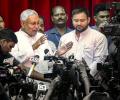
Various indicators make it amply clear that there are grave challenges facing the new government of Chief Minister Nitish Kumar, reports Indivjal Dhasmana.

'The reason why people are underweight and short is because they have not got quality food during their growing years.'

Seven out of eight women street vendors reported experiencing high blood pressure, while women in the middle age group raised concerns about delays in their menstrual cycles due to the extreme heat.

Gandhi wants Health Minister J P Nadda to make it mandatory for hospitals to display their rate of Caesarean, also known as C-section, deliveries in response to a Change.org petition against hospitals and doctors profiteering by pushing women towards surgical deliveries instead of natural vaginal birth.

India will either have to create a system in which certain geographical areas will wind up being permanent political outsiders at the Union level or it will have to create a system in which certain votes are weighted more heavily than others, observes Mihir S Sharma.

With India set to be the world's most populous country by 2030, there is a growing need to control population through better use of contraceptives, says Abhishek Waghmare.

13,660 km. 40 million Biharis participate in this year's 'world's longest' human chain.

Marriage is the most common purpose of migration, with 49 per cent migrating for marriage, followed by moving with households (15 per cent) and work/employment (10 per cent), discovers Devanik Saha.
A bench of Justices D Y Chandrachud and M R Shah took serious note of Maharashtra government's shifting patients lodged in mental health institutes to homes for beggars and asked it to discontinue the practice immediately saying it is counter-productive and runs against the provisions of Mental Health Act.
Employment in India saw a V-shaped recovery after being adversely impacted between April and June 2020 during the Covid lockdown and during April-June 2021, when the second wave struck, said Krishnamurthy V Subramanian, former chief economic advisor, in a paper released on Friday. Subramanian is now serving as executive director of the International Monetary Fund (IMF). From the official survey data of the National Sample Survey Organisation (NSSO), the paper titled 'Employment in India: Data Sources, Facts, and Trends' showed that both worker-population ratio (WPR) and labour force participation rate (LFPR) were higher, while the unemployment rate was lower during October-December 2022 when compared to the corresponding quarter in 2019.
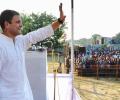
In Madhya Pradesh, the C-Voter poll projections gave the BJP 107 seats with a vote share of 41.5 per cent, against Congress' vote share of 42.3 per cent and a simple majority of 116 seats.

"The issue is not whether India is first or third or fourth, the issue is that this perception should be taken seriously to set our house in order".
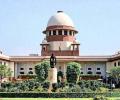
The observation was made by a bench headed by Justice UU Lalit which was hearing a plea seeking adequate infrastructure across the country for providing effective legal aid to women abused in matrimonial homes and creating shelter homes for them.

The mortal remains of 29 people who died till Thursday were handed over to their relatives and the bodies were either buried or cremated, Kallakurichi District Collector Prasanth M S said.
